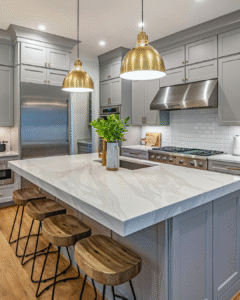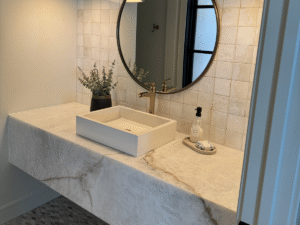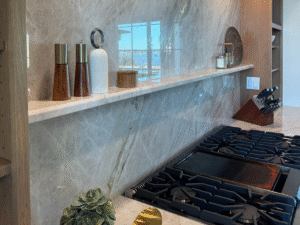
Commercial spaces need surfaces that can handle daily use. In offices, civic buildings, public facilities, and administrative spaces, countertops support employees, visitors, equipment, paperwork, and essential services. At the same time, these surfaces help shape a visitor’s first impression of the building.
Well-planned Fort Worth commercial countertops can add durability, function, and a professional finish. They work well in reception areas, service counters, conference rooms, break rooms, restrooms, and other shared spaces.
At Hard Rock Custom Countertops, we provide custom fabrication and installation for commercial projects throughout Fort Worth and the Dallas-Fort Worth Metroplex.
Commercial Countertops Must Balance Style and Function
Commercial countertops often serve more people than residential surfaces. For example, employees, visitors, vendors, and members of the public may use them throughout the day. As a result, every design and fabrication detail matters.
Strong Fort Worth commercial countertops should:
- withstand frequent use
- support efficient daily work
- create a professional appearance
- coordinate with cabinets and millwork
- fit technology and equipment
- provide practical work surfaces
- connect with the building’s design
The process should begin with a clear understanding of how each area will function.
Countertops for Civic and Municipal Buildings
Civic buildings often include several types of spaces in one facility. While public-facing areas need to feel welcoming and organized, staff areas must support daily administrative work. Therefore, each countertop should reflect the needs of its specific location.
Custom stone surfaces may be used in:
- public service counters
- reception areas
- municipal offices
- permit and records departments
- council rooms
- employee break rooms
- public restrooms
- administrative workstations
- security desks
These projects require careful planning. The surface must fit the workflow, cabinetry, equipment, and surrounding construction.
Public Service and Transaction Counters
Public service counters are often among the busiest surfaces in a civic building. In addition to supporting forms and computers, they may hold payment equipment and security devices. More importantly, they create a practical place for staff to assist visitors.
Planning may include:
- standing-height service areas
- accessible counter sections
- transaction openings
- computer and cable access
- durable front edges
- privacy panels
- integrated millwork
- space for documents
Thoughtful Fort Worth commercial countertops can help these areas feel orderly and professional.
Reception Desks and Entry Areas
A reception area introduces visitors to the building. A custom countertop can help the desk feel connected to the architecture instead of looking added later.
Reception surfaces may need room for:
- computers
- phones
- visitor check-in
- security equipment
- office supplies
- document storage
- signs
- accessible service areas
Quartz, granite, and other stone surfaces can create a strong visual anchor while supporting daily use.
Quartz for Consistent Commercial Interiors
Quartz is often a practical choice for commercial interiors. Because it offers a consistent appearance, it can create continuity across large surfaces and multiple rooms. For that reason, it can work well in:
- professional offices
- civic buildings
- employee areas
- public service spaces
- healthcare-related settings
- conference rooms
Quartz may be a good fit when the project calls for:
- consistent color
- subtle movement
- neutral tones
- a clean appearance
- coordinated surfaces
- a modern or transitional style
For many projects, quartz creates Fort Worth commercial countertops that look polished without overwhelming the space.
Granite for Natural Character
Granite can add depth and variation to a commercial interior. For instance, it works well in formal reception areas, civic buildings, and executive offices. Additionally, its natural pattern can complement spaces with traditional architectural details.
Granite can pair well with:
- wood millwork
- brick or stone walls
- bronze or black finishes
- traditional architecture
- formal public areas
- large reception desks
Its natural movement can make a large counter feel distinctive and substantial.
Countertops for Conference Rooms
Conference rooms often include storage, serving areas, technology stations, or built-in credenzas. When these elements share a custom stone surface, the room can feel more coordinated and complete.
Commercial countertops may support:
- coffee stations
- presentation equipment
- serving areas
- storage cabinets
- documents
- technology
- meeting supplies
The surface should work with the conference table, cabinetry, flooring, and wall finishes.
Employee Break Rooms
Break rooms are among the most frequently used spaces in many buildings. Consequently, their countertops must support coffee makers, microwaves, sinks, refrigerators, and shared supplies. A practical layout also helps employees move through the space efficiently.
A functional design should consider:
- appliance placement
- sink location
- cabinet storage
- electrical outlets
- seating
- traffic flow
- waste stations
- daily supplies
Custom Fort Worth commercial countertops can help a break room feel more organized and easier to use.
Commercial Restroom Countertops
Public and employee restrooms also benefit from custom fabrication. In these spaces, vanity surfaces must fit sinks, plumbing, partitions, mirrors, and nearby walls. Therefore, accurate measurements are essential.
Commercial restroom countertops may include:
- multiple sink cutouts
- integrated backsplashes
- wall-to-wall vanity runs
- accessible sink areas
- custom supports
- side splashes
- durable edge profiles
Accurate measurements are especially important during renovation projects because existing walls are not always straight or square.
Libraries and Community Facilities
Libraries and community buildings often include reception desks, work areas, meeting rooms, computer stations, and gathering spaces.
Stone surfaces can support:
- circulation desks
- information counters
- staff workstations
- public computer areas
- refreshment stations
- meeting-room counters
- restroom vanities
These buildings need surfaces that feel welcoming while still supporting heavy daily use.
Professional Office Countertops
Commercial countertop work also includes private offices and professional buildings.
Custom surfaces may be used for:
- reception desks
- conference room counters
- office kitchenettes
- copy rooms
- built-in credenzas
- supply stations
- executive office built-ins
- file and equipment areas
By using coordinated materials, the entire office can feel more consistent from one room to the next.
Include Accessibility in the Design
Accessibility should be part of the initial planning process. For example, counter height, knee clearance, approach space, and support placement can affect the final layout. By addressing these details early, the project team can integrate accessible features into the overall design.
The design may include:
- lower service sections
- accessible sink areas
- open knee space
- clear approach areas
- rounded edges
- concealed supports
- easy access to equipment
These details should be coordinated with the architect, contractor, cabinet provider, and project plans.
Plan Technology Before Fabrication
Commercial counters often support technology as well as paperwork. Accordingly, the design may need to accommodate:
- computers
- monitors
- phones
- scanners
- payment equipment
- security devices
- printers
- charging stations
Before fabrication, confirm:
- equipment dimensions
- outlet locations
- cable openings
- monitor placement
- ventilation needs
- storage requirements
- access panels
- future replacement space
Ultimately, early planning can prevent costly or difficult changes after installation.
Choose a Practical Edge Profile
The edge profile affects both appearance and long-term use. In many commercial spaces, a simple edge works best.
Common choices may include:
- eased edges
- rounded edges
- beveled edges
- mitered edges
- custom profiles
The best option depends on the material, design, and expected use.
Plan Support for Overhangs
Commercial counters may include transaction ledges, accessible sections, and long spans. Therefore, these areas may require added support.
Support may include:
- steel brackets
- concealed supports
- reinforced millwork
- structural cabinet framing
- pony walls
- added blocking
Support should be planned before fabrication. This helps keep the finished installation clean and secure.
Field Measurements Matter
Commercial renovations often involve existing walls, cabinets, floors, and building systems. However, those conditions may not match the drawings exactly. That is why on-site field measurements are so important.
Field measurements can identify:
- uneven walls
- out-of-square corners
- plumbing locations
- support conditions
- wall thickness changes
- equipment conflicts
- differences from the plans
Accurate field verification is an important part of successful Fort Worth commercial countertop installation.
Coordinate with Other Trades
Because several trades may be involved, commercial countertop installation must fit into the larger construction schedule.
The countertop team may need to coordinate with:
- architects
- general contractors
- millwork providers
- plumbers
- electricians
- equipment vendors
- facility representatives
- project managers
As a result, clear communication can help keep fabrication and installation on schedule.
Choose Materials Based on the Building
The best material depends on the facility, amount of use, design, and project requirements.
Consider these questions:
- Is the counter public-facing?
- Will it hold food, paperwork, or equipment?
- Does the project need a consistent pattern?
- Should the surface match existing finishes?
- How large are the sections?
- Are there accessibility requirements?
- Should the look feel formal or understated?
The material should support both the building’s function and its design.
Commercial Countertop Installation in Fort Worth
Hard Rock Custom Countertops provides fabrication and installation for commercial projects throughout Fort Worth and the Dallas-Fort Worth Metroplex.
We work with contractors, architects, designers, millwork providers, facility representatives, and project managers.
Our commercial work may include:
- civic buildings
- municipal offices
- professional offices
- reception areas
- public service counters
- conference rooms
- break rooms
- commercial restrooms
- libraries
- community facilities
- administrative spaces
- custom built-ins
From field measurements through fabrication and installation, our team helps create commercial surfaces that fit the project.
Fort Worth Commercial Countertops for Public and Professional Spaces
Commercial countertops should feel durable, professional, and connected to the building. Above all, they should support employees, visitors, and the facility’s daily activities.
Thoughtful Fort Worth commercial countertops can help offices, civic buildings, and public spaces feel more organized, polished, and complete.
Businesses and project teams planning commercial construction or renovation in Fort Worth may find information through the City of Fort Worth Development Services Department, the Fort Worth Chamber, the Greater Fort Worth Builders Association, and NARI North Texas. Material inspiration and commercial surface options are also available through Verona Marble, Daltile, and Cambria